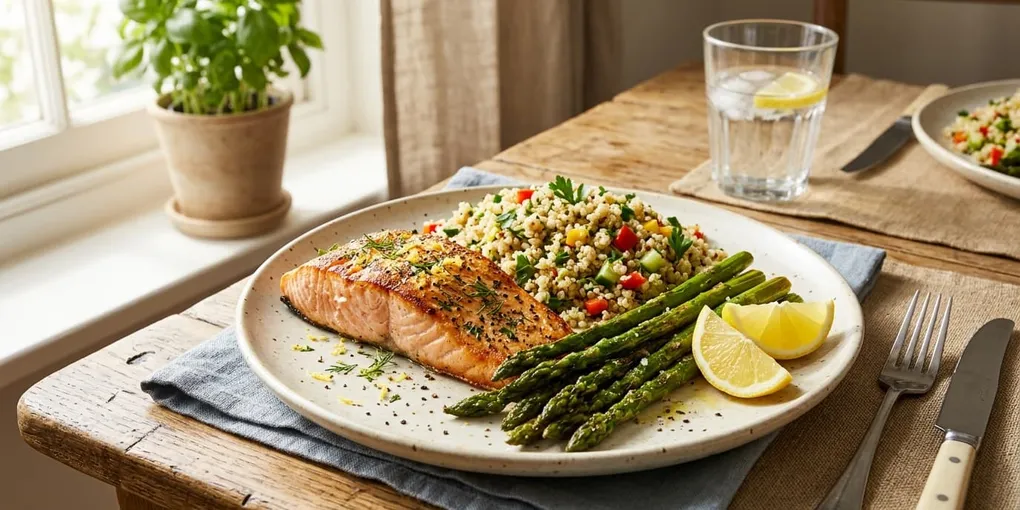
The Harvard Plate Protein Guide: How Much Protein You Need and Healthy Sources
Discover how to fill 1/4 of your plate with high-quality protein without scales, compare animal and plant sources, and meal-prep with ease.
Key Takeaways
- The one-quarter rule delivers optimal satiety: Dedicating 25% of your plate volume to protein supplies approximately 20-35 grams of amino acids per meal, stimulating satiety hormones without requiring gram scales.
- Protein source matters more than total quantity: Harvard nutritional guidelines emphasize fish, poultry, eggs, legumes, and tofu while minimizing processed meats and limiting red meat to reduce long-term cardiovascular risks.
- Plant and animal proteins complement each other: Combining diverse plant proteins like lentils, chickpeas, and edamame with lean animal proteins ensures a complete essential amino acid profile and high dietary fiber intake.
The best protein sources to fill one-quarter of the Harvard healthy eating plate are fish, poultry, eggs, beans, lentils, chickpeas, tofu, and tempeh. Harvard researchers advise choosing diverse lean proteins, eating fish twice weekly, and replacing red meat with legumes to optimize cardiovascular health while sustaining lean muscle tissue.
When people adopt healthier eating habits, they often struggle with portion sizing. Traditional fitness tracking demands that you weigh chicken breasts and calculate macronutrient ratios on digital scales. This numerical approach leads to frustration and kitchen burnout. By following the foundational Harvard Plate guide, you replace tedious math with visual clarity. When combined with our recommendations on filling half your plate with fiber and strategies for sustainable weight loss without calorie counting, mastering your protein quadrant creates consistent energy and long-lasting satiety.
How much protein do you actually need on 1/4 of the Harvard plate?
You need approximately 20-35 grams of protein per main meal to trigger muscle protein synthesis and maintain stable satiety throughout the day. On a standard 22-24 centimeter dinner plate, this amount corresponds visually to one dedicated quadrant, roughly the surface area and thickness of your open palm.
The classic Recommended Dietary Allowance (RDA) of 0.8 grams of protein per kilogram of body weight was established decades ago to prevent biological deficiency in sedentary populations. However, modern clinical nutrition research indicates that optimal metabolic health, appetite regulation, and lean tissue preservation require higher targets. Leading researchers like Phillips and colleagues suggest an optimal daily range of 1.2-1.6 grams per kilogram for active adults.
Dividing your daily protein intake across three balanced meals produces better metabolic outcomes than eating a light breakfast and a massive dinner. When you consume at least 25-30 grams of protein during a single meal, you reach the leucine threshold. Leucine is an essential branched-chain amino acid that acts as a molecular switch, signaling your muscles to repair and synthesize new cellular proteins.
Consuming this quadrant of protein also triggers the release of potent gut satiety peptides. Endocrine cells in your digestive tract release peptide YY (PYY) and glucagon-like peptide-1 (GLP-1), while circulating levels of the hunger hormone ghrelin drop sharply. The result is steady fullness that lasts 4-5 hours, eliminating the urge to graze on refined snacks between meals.
Which protein sources does the Harvard Healthy Eating Plate prioritize?
The Harvard Healthy Eating Plate prioritizes protein quality over pure quantity, ranking whole food sources based on their total nutritional package rather than isolated protein numbers. When you choose a protein source, you also consume the fats, minerals, fiber, and micronutrients packaged alongside it.
Harvard nutrition scientists organize protein options into three distinct tiers:
Tier 1: Preferred daily sources
- Fatty and white fish: Salmon, mackerel, sardines, cod, and trout provide easily digestible protein along with anti-inflammatory omega-3 fatty acids (EPA and DHA), which support heart health and cognitive function.
- Legumes and pulses: Lentils, chickpeas, black beans, edamame, and split peas deliver plant protein alongside prebiotic fiber, folate, potassium, and zero saturated fat.
- Poultry: Skinless chicken and turkey breast offer lean amino acids with minimal saturated fat.
- Eggs: Whole eggs supply choline, lutein, and complete amino acid profiles with high biological availability.
- Soy products: Tofu, tempeh, and unsweetened soy milk provide complete plant protein with protective isoflavones.
Tier 2: Moderate intake sources
- Unprocessed red meat: Beef, lamb, and pork can fit into a balanced diet in modest amounts (1-2 servings per week), but higher consumption correlates with increased risks of colorectal cancer and cardiovascular conditions.
- Dairy products: Plain Greek yogurt, cottage cheese, and modest portions of natural cheese provide calcium and protein, but should not crowd out plant-based options.
Tier 3: Sources to avoid or strictly limit
- Processed meats: Bacon, sausages, hot dogs, salami, and deli cold cuts contain elevated sodium, nitrates, and advanced glycation end-products. The World Health Organization categorizes processed meat as a Group 1 carcinogen, and Harvard guidelines recommend avoiding these products whenever possible.
Plant vs animal protein: how do they compare for satiety and metabolic health?
Plant and animal proteins each offer distinct nutritional advantages, and combining both styles creates an exceptionally resilient dietary foundation. Animal proteins provide all nine essential amino acids in high concentrations, while plant proteins deliver dietary fiber, polyphenols, and protective plant sterols that animal foods lack completely.
The following comparative table illustrates how common protein sources perform across key nutritional metrics when portioned for one-quarter of a standard plate:
| Protein Source | Protein per 100g | Visual 1/4 Plate Portion | Key Micronutrients & Fiber | Harvard Quality Ranking |
|---|---|---|---|---|
| Wild Salmon | 22-25g | 1 palm-sized fillet (120-150g) | Omega-3 EPA/DHA, Vitamin D, B12 | Tier 1 (High priority, eat 2x weekly) |
| Chicken Breast | 28-31g | 1 palm-sized cutlet (120-140g) | Niacin, Vitamin B6, Selenium | Tier 1 (Excellent lean staple) |
| Eggs (2 whole + 1 white) | 16-18g | 2-3 large cooked eggs | Choline, Lutein, Iron, Vitamin A | Tier 1 (Nutrient-dense breakfast) |
| Cooked Brown Lentils | 9-10g | 1 cupped fist (150-180g) | 8g Fiber, Folate, Iron, Magnesium | Tier 1 (Heart-healthy daily choice) |
| Firm Tofu or Tempeh | 17-20g | 1 palm-sized block (130-150g) | Calcium, Isoflavones, Manganese | Tier 1 (Complete plant protein) |
| Plain Greek Yogurt (0-2%) | 10-12g | 1 deep bowl cup (180-200g) | Calcium, Probiotics, Phosphorus | Tier 2 (Beneficial fermented staple) |
| Lean Beef Steak | 26-28g | 1 modest palm (100-120g) | Bioavailable Heme Iron, Zinc, B12 | Tier 2 (Limit to 1-2 meals weekly) |
| Processed Sausages | 12-15g | 2 links (100g) | High Sodium, Nitrates, Saturated Fat | Tier 3 (Avoid or strictly minimize) |
As shown in this comparison, plant proteins such as lentils and beans contain lower protein density per 100 grams than animal meats, but they supply valuable fiber that actively slows carbohydrate absorption and nourishes beneficial gut bacteria. Conversely, animal proteins deliver complete amino acids with high bioavailability, meaning your body absorbs virtually all ingested amino acids without requiring specific food combinations.
Research published by Leidy and colleagues demonstrates that both high-quality plant proteins and lean animal proteins generate significant thermic effects. The thermic effect of food (TEF) for protein ranges between 20-30%, meaning your body expends nearly one-quarter of the ingested protein calories simply digesting and metabolizing the amino acids.
How to build a weekly protein basket without kitchen scales?
Building a dependable weekly protein basket does not require spending hours in the kitchen or logging numbers into digital spreadsheets. You can assemble varied, satisfying protein options by applying four practical meal-prep strategies based on visual benchmarks.
Step 1: Stock three shelf-stable plant protein staples
Keep your pantry supplied with canned organic lentils, chickpeas, and black beans. Canned legumes require zero boiling time: simply drain, rinse thoroughly under cold water to remove excess sodium, and toss directly into salads, warm grain bowls, or vegetable curries. Dry red split lentils are another kitchen shortcut, cooking in just 15 minutes without prior soaking.
Step 2: Batch-cook two animal protein anchors on Sunday
Prepare two versatile animal protein options that stay fresh for 3-4 days in airtight glass containers:
- Sheet-pan herb chicken: Slice chicken breasts into palm-sized cutlets, toss with olive oil, oregano, garlic powder, and paprika, and bake at 200 degrees Celsius for 20 minutes.
- Hard-boiled pastured eggs: Boil half a dozen eggs to keep in the refrigerator for rapid breakfast additions or midday meal adjustments.
Step 3: Utilize frozen seafood for zero-waste freshness
Fresh fish spoils quickly, leading many people to skip seafood entirely. Keep frozen individually vacuum-sealed fillets of wild salmon, cod, or wild shrimp in your freezer. You can thaw a salmon fillet in a bowl of cold water in 15 minutes, season with lemon and black pepper, and sear in a cast-iron skillet for 6-8 minutes.
Step 4: Rely on the visual hand guide at every meal
Discard your kitchen scales and use your hand as an infallible visual reference:
- 1 palm (surface area and thickness): Represents one serving of fish, poultry, tofu, or steak (approximately 25-30g of protein).
- 1 cupped hand: Represents one serving of cooked lentils, beans, or edamame.
- 2 full thumbs: Represents your healthy fat allocation (such as nuts, seeds, or extra virgin olive oil).
By rotating these sources across your week, you effortlessly secure diverse amino acids, essential fatty acids, and gut-friendly prebiotic fiber.
Frequently Asked Questions (FAQ)
Can I get enough protein on the Harvard plate if I eat exclusively plant-based? Yes. You can achieve optimal protein intake on a 100% plant-based diet by filling your one-quarter quadrant with protein-dense legumes, tofu, tempeh, edamame, and seitan. Combining different plant sources throughout the day, such as beans with whole grain rice or hummus with whole wheat bread, ensures a complete spectrum of essential amino acids without special protein powders.
Does eating protein at breakfast really make a difference for hunger? Yes. Consuming 20-30 grams of protein during your morning meal significantly reduces circulating ghrelin levels and blunts afternoon sugar cravings. Replacing typical high-carbohydrate breakfast options like pastries or sugary cereals with eggs, Greek yogurt, or tofu scramble establishes stable blood glucose levels that last until lunch.
Is it dangerous to eat more than 30 grams of protein in a single meal? No. The common myth that human intestines can only absorb 30 grams of protein in one sitting has been disproven by modern digestive physiology. While muscle protein synthesis hits a temporary plateau around 30-40 grams, your gut absorbs the remaining amino acids more slowly over several hours, utilizing them for enzyme production, immune defense, and cellular repair.
Do I need protein shakes if I use the Harvard plate method? Most individuals do not need protein powders or commercial shakes when following the Harvard plate architecture. Whole food protein sources deliver superior micronutrient density, chewing satisfaction, and gut hormone stimulation compared to liquid shakes. Protein powders are best reserved as convenient occasional tools for demanding athletic schedules or hurried travel days.
Track your protein sector in 3 seconds with AI
Ensuring you receive adequate high-quality protein should never feel like a tedious accounting assignment. You do not need to weigh warm fillets on plastic scales or search through conflicting nutritional databases to confirm your portions.
PlateTracker transforms your smartphone camera into an effortless nutrition assistant. Simply take a photo of your plate: our intelligent vision AI instantly evaluates your vegetable, whole grain, and protein sectors in 3 seconds. You get clear visual feedback verifying that your protein quadrant is adequately filled, without calorie counting, gram calculations, or stress.
Sources
- Harvard T.H. Chan School of Public Health. The Nutrition Source: Healthy Eating Plate & Protein. https://nutritionsource.hsph.harvard.edu/what-should-you-eat/protein/
- Leidy, H. J., Clifton, P. M., Astrup, A., et al. (2015). The role of protein in weight loss and maintenance. The American Journal of Clinical Nutrition, 101(6), 1320S-1329S.
- Phillips, S. M., Chevalier, S., & Leidy, H. J. (2016). Protein requirements beyond the RDA: implications for optimizing health. Applied Physiology, Nutrition, and Metabolism, 41(5), 565-572.
Check Your Plate Balance by Photo
Snap your meal in PlateTracker. AI determines Harvard Plate proportions and nutrients in 3 seconds without scales.