Pizza, Burgers, and Pasta: How to Apply the Plate Method to Fast Food
Can you enjoy pizza, burgers, and pasta on a healthy diet? Learn how the Harvard plate method balances comfort foods to eliminate sugar spikes and food guilt.
The Harvard plate method does not ban pizza, burgers, or pasta, but transforms their metabolic impact through strategic visual balancing. By pairing two slices of pizza or half a burger with a half plate of raw leafy greens, dietary fiber slows glucose absorption, sustains satiety, and eliminates post meal guilt entirely.
Key Takeaways
- The Harvard plate method accommodates fast food by treating refined carbohydrates as the designated carb sector rather than forbidden territory.
- Eating raw leafy vegetables and crunchy salads before pizza or burgers creates a viscous intestinal fiber gel that blunts postprandial glucose spikes.
- Classic burger meals easily conform to healthy plate ratios by discarding the top bun, doubling the patty for protein, and swapping french fries for greens.
- Eliminating cheat meal binary thinking prevents binge eating cycles and protects long term metabolic rate from rebound weight gain.
- Visual plate tracking focuses on total meal volume and nutritional diversity, proving sustainable healthy eating requires zero rigid deprivation.
Why Do Restrictive Diets Fail When You Crave Comfort Foods?
Traditional dieting philosophies frame nutrition as a moral contest between clean foods and sinful indulgences. When cravings for pizza, cheeseburgers, or creamy pasta arise, dieters attempt total suppression through willpower. Neurobiological research proves that cognitive dietary restraint elevates circulating cortisol while increasing dopamine sensitivity toward high carbohydrate foods. Eventually, willpower fatigues, culminating in uncontrolled bingeing.
This binary mindset gives rise to the destructive cheat meal phenomenon. Dieters starve themselves throughout the working week, only to consume thousands of surplus calories in a single sitting on Saturday evening. Massive calorie surges accompanied by refined starches trigger severe digestive distress, systemic inflammation, and deep emotional remorse. The psychological fallout is thoroughly examined in our guide on overcoming calorie tracking food guilt.
Restrictive Diet Trap:
Cravings Suppressed -> Cortisol & Grehlin Spike -> Weekend Cheat Binge -> Intense Guilt -> Chronic Yo-Yo Cycle
In addition, alternating between severe caloric restriction and weekend bingeing destabilizes leptin signaling and slows resting metabolic expenditure. This metabolic adaptation causes dieters to regain lost weight rapidly, trapping them in the physiological rebound detailed in our report on yo-yo dieting and metabolic regain. The plate method offers a sustainable exit from this cycle by making comfort foods a regular, peaceful component of everyday nutrition.
How Does Dietary Fiber Buffer Fast Food Glucose Spikes?
Fast food meals cause sluggishness primarily because refined flours, melted cheeses, and sugary condiments trigger sharp glycemic excursions. When you consume four slices of standard white dough pizza, simple starches digest within minutes. Blood glucose spikes rapidly, prompting a massive insulin surge from the pancreas that subsequently drops systemic glucose below baseline, causing reactive lethargy and renewed hunger two hours later.
Introducing a substantial portion of raw leafy vegetables fundamentally alters this digestive timeline through three distinct physiological mechanisms:
- Viscous Fiber Gel Formation: Soluble fibers absorb moisture in the stomach, forming an unhurried gel mesh that traps carbohydrate molecules and slows their access to digestive amylase enzymes.
- Delayed Gastric Emptying: Bulk from cruciferous vegetables and mixed greens physically impedes stomach contractions, releasing food into the duodenum gradually.
- Incretin Hormone Release: Mechanical stretch receptors activate the secretion of glucagon-like peptide 1 (GLP-1) and peptide YY, transmitting potent satiety signals directly to the brainstem.
Digestive Difference:
Fast Food Alone -> Rapid Amylase Breakdown -> Steep Glucose Spike -> Reactive Crash
Fast Food + Half Plate Greens -> Viscous Fiber Gel Barrier -> Slow Glucose Diffusion -> Steady Energy
Clinical trials demonstrate that consuming a salad immediately prior to or alongside high glycemic carbohydrates lowers peak postprandial glucose by up to thirty percent. By applying the foundational principles from our Harvard plate method guide, you enjoy fast food flavors while keeping hormonal curves smooth.
How Do Unbalanced and Plate Balanced Fast Food Compare?
Examining fast food through the lens of meal architecture reveals that poor health outcomes stem from disproportionate macronutrient ratios rather than the presence of bread or cheese alone.
The following comparative table illustrates how structural plate adjustments transform a typical fast food experience:
| Nutritional Parameter | Standard Fast Food Order | Plate Balanced Fast Food Setup |
|---|---|---|
| Typical Composition | 80% refined carbs and fat, 15% protein, 5% fiber | 50% fresh vegetables, 25% protein, 25% comfort carbs |
| Fiber Quantity | Under 2 grams per sitting | 8 to 14 grams per sitting |
| Post Meal Energy | Reactive hypoglycemia and intense sluggishness | Steady mental focus and sustained vitality |
| Satiety Duration | 90 to 120 minutes before cravings return | 4 to 5 hours of peaceful fullness |
| Digestive Transit Time | Sluggish transit due to zero roughage | Optimal peristalsis driven by insoluble fiber |
| Psychological State | Guilt, remorse, and diet failure panic | Enjoyment, satisfaction, and effortless control |
Modifying plate geometry changes everything. You retain the sensory delight of crispy crusts and savory sauces while providing your microbiome with the prebiotic fiber necessary to thrive.
How Do You Apply the Plate Method to Four Classic Fast Foods?
Transforming iconic comfort meals into balanced nutritional plates requires zero culinary acrobatics. You simply follow visual geometry: allocate half your plate to vibrant greens and crunchy vegetables, reserving the remaining sectors for protein and your craved comfort food.
1. The Artisanal or Delivery Pizza Plate
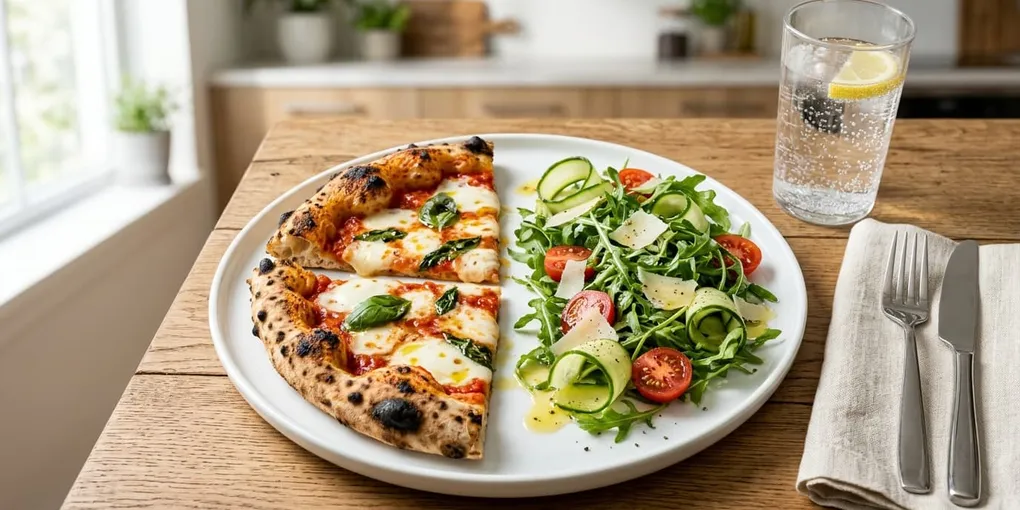
A standard takeout pizza presents an overwhelming carbohydrate footprint if eaten alone. To align it with healthy plate ratios, take two moderate slices of wood-fired or thin crust pizza. Place them on one half of your dinner plate, where they serve as both your complex carbohydrate and moderate protein sectors. Fill the other fifty percent of the plate with fresh baby arugula, sliced cherry tomatoes, crisp cucumbers, and a drizzle of balsamic vinegar and extra virgin olive oil.
Pizza Plate Architecture:
[ 1/2 Plate: Crisp Arugula, Shaved Fennel & Cherry Tomatoes ]
[ 1/2 Plate: 2 Slices Thin Crust Margherita or Prosciutto Pizza ]
2. The Gourmet Cheeseburger Plate
Restaurant burgers typically arrive flanked by a mountain of deep fried french fries. To build an optimal plate, order a high quality beef or turkey patty with real cheddar cheese, tomato, and lettuce. Remove the top bun, which halves the refined wheat content while preserving the burger texture. Skip the french fries entirely and request a double garden salad or grilled asparagus on the side.
Burger Plate Architecture:
[ 1/2 Plate: Roasted Green Beans or Garden Herb Salad ]
[ 1/4 Plate: Juicy Grilled Beef Patty with Cheddar ]
[ 1/4 Plate: Bottom Brioche Bun & Caramelized Onions ]
3. The Classic Italian Pasta Plate
Traditional restaurant pasta servings routinely contain four cups of boiled noodles, overwhelming the plate with starch. At home or dining out, reduce the pasta serving to roughly one and a half cups, tossed with your favorite bolognese or marinara sauce. Fill the unoccupied half of the plate with roasted zucchini ribbons, grilled bell peppers, or steamed broccoli florets tossed with garlic.
Pasta Plate Architecture:
[ 1/2 Plate: Roasted Zucchini, Peppers & Garlic Broccoli ]
[ 1/4 Plate: Lean Beef Mince or Grilled Chicken Strips ]
[ 1/4 Plate: Rigatoni or Spaghetti al Dente ]
4. The Sushi and Noodle Bowl Setup
Sushi rolls wrapped in seasoned white rice pack unexpected amounts of simple sugars due to vinegar rice seasoning. When ordering sushi, select one classic specialty roll or six nigiri pieces. Pair them with a generous bowl of steamed edamame pods for plant protein and an abundant wakame seaweed and cucumber salad with sesame seeds.
Sushi Plate Architecture:
[ 1/2 Plate: Cucumber Sunomono & Mixed Seaweed Salad ]
[ 1/4 Plate: Steamed Edamame & Fresh Salmon Sashimi ]
[ 1/4 Plate: 1 Signature Sushi Roll or 6 Pieces Nigiri ]
These practical strategies prove that dining socially does not conflict with metabolic health, a reality we explore further in our guide to ordering healthy meals in restaurants.
Why Is Banishing the Cheat Meal Mentality Critical for Success?
The term cheat meal implies moral transgression. When people believe they have cheated on their health protocol, cognitive dissonance triggers the well documented what-the-hell effect. Dieters assume the entire day is ruined, encouraging them to consume cookies, ice cream, and snacks until midnight.
Adopting the plate method eradicates the cheat meal concept completely. Because no food is banned, there is nothing to cheat on. Pizza on Tuesday night is simply a meal where wheat dough occupies the carbohydrate sector, balanced by fresh vegetables. When fast food loses its forbidden status, emotional urgency evaporates.
Healthy Mindset Shift:
"I am cheating on my diet" -> "I am balancing my pizza with crunchy vegetables"
Guilt & Binge Spiral       -> Satisfaction & Effortless Consistency
This psychological liberation restores trust in your hunger cues. Instead of obsessing over future weekend binges, you eat comfortably, savor each bite mindfully, and move forward with your day.
Frequently Asked Questions
Can I lose weight while eating pizza and burgers once or twice a week?
Yes, sustainable weight management depends on consistent energetic balance and diet quality rather than total food exclusion. By balancing two slices of pizza or half a burger with an abundance of vegetables, total meal calories remain moderate while fiber prevents reactive overeating later in the day.
What should I do if a restaurant does not serve side salads?
If a burger joint or pizzeria offers limited vegetable sides, order a side of sliced pickles, grilled onions, or tomato slices. Alternatively, enjoy your meal in moderate portions and make sure your subsequent meal features an extra generous vegetable portion to maintain daily fiber balance.
Is thin crust pizza healthier than deep dish pizza?
Thin crust dough contains roughly half the starch volume of deep dish or stuffed crust pizzas for an equivalent surface area. Choosing thin crust allows you to enjoy genuine artisanal pizza flavors while effortlessly keeping the starch within your designated plate quadrant.
Should I blot excess oil off pizza slices with a napkin?
Blotting surface oil removes a modest fifteen to thirty calories per slice, but it reinforces obsessive dietary behaviors. A superior approach is simply enjoying the pizza as prepared while filling half your plate with fibrous greens to manage total nutritional density naturally.
Enjoy Your Favorite Meals in Perfect Balance With PlateTracker
Healthy living does not require swearing off pizza, burgers, or Italian pasta. True nutritional mastery lies in knowing how to arrange your plate so every meal fuels your body and satisfies your soul.
Stop stressing over restrictive diet rules. Open PlateTracker, snap a photo of your next comfort meal alongside your salad, and let intelligent visual tracking keep you perfectly balanced every day.
Sources and Scientific References
- Jenkins, D. J., et al. (2008). Effect of a low-glycemic index or a high-cereal fiber diet on type 2 diabetes: a randomized trial. JAMA, 300(23), 2742-2753.
- Rolls, B. J., et al. (2004). Salad and satiety: energy density and portion size of a first-course salad affect energy intake at lunch. Journal of the American Dietetic Association, 104(10), 1570-1576.
- Chandon, P., & Wansink, B. (2007). The Biasing Health Halos of Fast-Food Restaurant Health Claims: Lower Calorie Estimates and Higher Side-Dish Consumption. Journal of Consumer Research, 34(3), 301-314.
- Harvard T.H. Chan School of Public Health (2011). The Healthy Eating Plate: Visual Proportions and Nutritional Guidelines. Department of Nutrition, Harvard University.
- Polivy, J., & Herman, C. P. (1985). Dieting and binging: A causal analysis. American Psychologist, 40(2), 193-201.
Check Your Plate Balance by Photo
Snap your meal in PlateTracker. AI determines Harvard Plate proportions and nutrients in 3 seconds without scales.