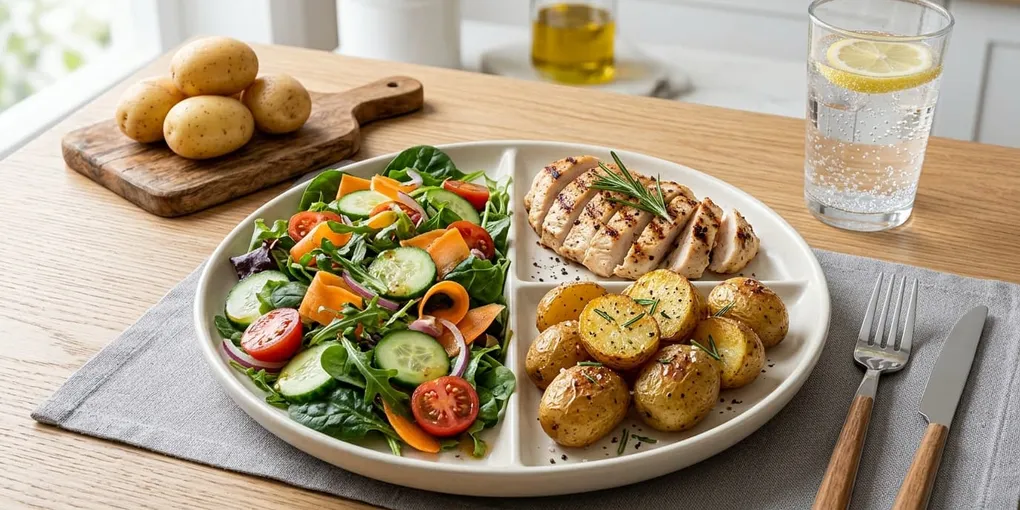
The Potato Paradox: Why the Harvard Plate Categorizes Potatoes as Starch, Not Vegetables
Discover why Harvard nutritionists excluded potatoes from the vegetable group, how cooking methods alter glycemic impact, and how to fit potatoes into your healthy plate.
Key Takeaways
- Botanical reality versus metabolic impact: Botanically, potatoes are tuberous vegetables, but their physiological effect on blood glucose mimics refined carbohydrates like white rice.
- The glycemic surge mechanism: Boiled and mashed potatoes digest rapidly into free glucose, triggering sharp insulin spikes followed by reactive hypoglycemia and hunger cravings.
- The cooling transformation: Cooking potatoes and cooling them in the refrigerator creates retrograded resistant starch, which feeds beneficial gut bacteria and blunts glycemic response.
- Proper plate allocation: Always position potatoes inside the one-quarter carbohydrate sector rather than the fifty percent vegetable half to maintain metabolic balance.
Harvard nutrition scientists classified potatoes as carbohydrates rather than vegetables because their rapidly digestible starch causes sharp surges in blood glucose and insulin comparable to white bread or refined sugar. To enjoy potatoes healthily, assign them to the one-quarter carbohydrate sector and pair them with abundant non-starchy vegetables and quality protein.
For generations, families around the world grew up viewing the potato as the ultimate staple vegetable. In traditional dietary guidelines, potatoes often shared visual space alongside broccoli, carrots, and leafy greens. When the Harvard T.H. Chan School of Public Health unveiled the Healthy Eating Plate, public confusion flared over one specific guideline: potatoes and French fries explicitly do not count as vegetables. This distinction was not an arbitrary culinary snub. Decades of large-scale epidemiological cohorts demonstrated that frequent potato consumption correlated with increased risk of type 2 diabetes and hypertension, mirroring the cardiometabolic impact of refined grains. By examining the core principles of the Harvard Healthy Eating Plate guide, discovering how to fill half your plate with true fiber-dense vegetables without boredom, avoiding the most frequent visual plate mistakes, and adjusting your portions for sustainable weight loss, you can enjoy potatoes without sabotaging metabolic health.
Why Did Harvard Nutritionists Exclude Potatoes From the Vegetable Group?
Harvard nutritionists excluded potatoes from the vegetable group because potato starch consists of rapidly hydrolyzable amylopectin that triggers metabolic effects nearly identical to refined grains.
When you chew a piece of broccoli, cellular cellulose and dense insoluble fibers encapsulate sugars, slowing digestion across several hours. In contrast, standard cooked russet or white potatoes undergo rapid enzymatic breakdown by salivary and pancreatic alpha-amylase:
- High glycemic index: A plain baked russet potato exhibits a glycemic index rating between eighty-five and one hundred and eleven, which equals or exceeds pure glucose and white baguettes.
- Elevated glycemic load: Unlike watermelon, which possesses a high glycemic index but minimal total carbohydrate per serving, a medium potato delivers thirty to thirty-five grams of dense starch, producing a massive glycemic load.
- Chronic insulin elevation: Frequent surges in circulating glucose demand heavy compensatory insulin secretion from pancreatic beta cells, promoting visceral adipose storage and progressive peripheral insulin resistance.
Large prospective cohort studies conducted by Harvard researchers following over one hundred and twenty thousand health professionals revealed that participants who increased their intake of baked, boiled, or mashed potatoes gained significantly more weight over four-year intervals than those who increased non-starchy vegetables.
How Does Culinary Preparation Alter Potato Digestibility and Starch Structure?
Culinary preparation alters potato digestibility and starch structure by changing gelatinization levels, moisture content, and the formation of crystalline resistant starch through retrogradation.
Not all potato meals generate identical metabolic responses. How you prepare, cool, and serve potatoes dictates whether your digestive tract processes them as fast fuel or prebiotic fiber:
| Potato Preparation Method | Glycemic Index (GI) | Glycemic Load (GL) | Resistant Starch Content | Recommended Plate Placement |
|---|---|---|---|---|
| Hot Mashed Potatoes | High (85 - 95) | High (20 - 25) | Very Low (< 1%) | Strictly 25% Carbohydrate Sector |
| Hot Baked Russet Potato | Very High (90 - 110) | High (25 - 30) | Very Low (< 1.5%) | Strictly 25% Carbohydrate Sector |
| Boiled Baby Potatoes with Skin | Moderate (60 - 70) | Moderate (12 - 16) | Low (2% - 3%) | 25% Carbohydrate Sector |
| Cooked and Cooled Potato Salad | Low to Moderate (50 - 58) | Low to Moderate (10 - 14) | High (5% - 8%) | 25% Carbohydrate Sector |
| Deep-Fried French Fries | High (75 - 85) | High (22 - 28) | Negligible (Oxidized fats) | Avoid or Rare Treat (Not on daily plate) |
Cooking potatoes swells starch granules and makes them instantly accessible to digestive enzymes. Allowing cooked potatoes to cool in a refrigerator for twelve to twenty-four hours reorganizes amylose chains into tightly packed crystalline structures known as type-three resistant starch.
What Is Resistant Starch and Why Does Cooling Potatoes Change Everything?
Resistant starch is a unique carbohydrate fraction that resists enzymatic hydrolysis in the upper digestive tract, arriving intact in the colon to feed beneficial gut microbiota.
When you consume cooled potatoes, up to ten percent of the starch bypasses absorption in your small intestine. This retrograded starch delivers three remarkable metabolic advantages:
1. Attenuated Glucose Response
- Physiological mechanism: Because crystalline amylose resists amylase cleavage, glucose molecules enter your bloodstream at a steady, prolonged pace.
- Metabolic advantage: Insulin secretion remains moderate, eliminating the sharp energy crash and rebound sweet cravings that typically follow hot mashed potatoes.
2. Microbial Production of Butyrate
- Physiological mechanism: Anaerobic bacteria in the large intestine ferment resistant starch into beneficial short-chain fatty acids, primarily butyrate.
- Metabolic advantage: Butyrate reinforces the gut mucosal barrier, reduces systemic low-grade inflammation, and improves whole-body insulin sensitivity.
3. Sustained Satiety Hormones
- Physiological mechanism: Fermentation processes in the distal bowel stimulate enteroendocrine L-cells to release peptide YY and glucagon-like peptide-1.
- Metabolic advantage: These hormones slow gastric emptying and send powerful satiety signals directly to your hypothalamus, keeping you satisfied for hours.
You can gently reheat cooled potatoes below sixty-five degrees Celsius without destroying the crystalline resistant starch matrix, allowing you to enjoy warm meals with lower glycemic impact.
How Can You Correctly Integrate Potatoes into the Harvard Plate?
You can correctly integrate potatoes into the Harvard Plate by treating them as your meal starch, keeping skins intact, pairing them with acidic dressings, and strictly protecting the vegetable half with leafy greens.
To enjoy the rich potassium and vitamin C of potatoes while supporting metabolic vitality, follow four practical rules:
1. Place Potatoes Firmly in the Twenty-Five Percent Sector
- Rule of thumb: Measure your potato portion visually as one fist or one-quarter of your ceramic plate.
- Visual boundary: Never allow potatoes to overflow into the fifty percent half reserved for non-starchy produce.
2. Choose Small Waxy Varieties with Intact Skins
- Culinary selection: Opt for red-skinned, purple, or fingerling baby potatoes rather than giant starchy baking potatoes.
- Nutritional benefit: Potato skins deliver polyphenols, dietary fiber, and trace minerals while physically slowing starch digestion.
3. Combine with Healthy Fats and Gentle Acids
- Dressing technique: Toss warm or chilled potatoes with cold-pressed extra virgin olive oil, fresh lemon juice, or apple cider vinegar.
- Gastric effect: Acetic acid in vinegar inhibits salivary amylase activity and delays gastric emptying, further dampening glycemic spikes.
4. Fill the Remaining Half with True Fibrous Vegetables
- Plate partners: Accompany your potato quarter with steamed broccoli, roasted bell peppers, grilled zucchini, or fresh arugula.
- Protective shield: Non-starchy vegetables provide high water volume and viscous fiber that buffers the absorption rate of the entire meal.
How Does Visual Meal Recognition Help You Spot the Potato Trap?
Visual meal recognition helps you spot the potato trap by instantly identifying starchy tubers and categorizing them into the correct plate quadrant without manual guesswork.
When building a meal at a restaurant buffet or cafeteria, it is easy for human perception to mistake potato salad or roasted wedges for vegetable side dishes. This simple visual error can inadvertently turn an intended fifty percent vegetable plate into a massive seventy-five percent carbohydrate bomb.
Instead of agonizing over ingredients, open the PlateTracker web app and snap a quick photo of your lunch. PlateTracker leverages intelligent computer vision trained on the Harvard Healthy Eating model to segment your plate accurately. The app correctly classifies potatoes as carbohydrates, confirming within three seconds whether your meal maintains true metabolic balance directly in your browser.
Frequently Asked Questions About Potatoes and the Plate Method
Are sweet potatoes considered vegetables on the Harvard plate?
No. Despite their higher beta-carotene content and lower glycemic index, sweet potatoes and yams are dense root tubers filled with complex carbohydrates. On the Harvard plate, sweet potatoes belong strictly in the twenty-five percent carbohydrate sector alongside whole grains.
Do I need to give up mashed potatoes completely?
You do not need to eliminate mashed potatoes. When you prepare them, leave the potato skins on, blend in pureed cauliflower to cut overall starch density by half, and limit your portion to one-quarter of the plate alongside lean protein and a large green salad.
Does boiling potatoes lower their glycemic index compared to baking?
Yes. Boiling potatoes in water keeps gelatinization lower than dry high-heat baking, resulting in a slightly lower glycemic index of sixty to seventy compared to over ninety for baked russet potatoes. Cooling the boiled potatoes lowers the glycemic index further.
Which vegetables should fill the fifty percent vegetable sector?
Fill the fifty percent vegetable half with colorful, non-starchy vegetables: leafy spinach, kale, cucumbers, tomatoes, bell peppers, broccoli, cauliflower, asparagus, zucchini, mushrooms, and green beans.
Sources
- Harvard T.H. Chan School of Public Health. The Healthy Eating Plate. Harvard University, Boston, MA.
- Mozaffarian, D., et al. (2011). Changes in diet and lifestyle and long-term weight gain in women and men. New England Journal of Medicine, 364(25), 2392-2404.
- Foster-Powell, K., et al. (2002). International table of glycemic index and glycemic load values: 2002. The American Journal of Clinical Nutrition, 76(1), 5-56.
- Birt, D. F., et al. (2013). Resistant starch: promise for improving human health. Advances in Nutrition, 4(6), 587-601.
- Rolls, B. J. (2014). Dietary energy density: Applying behavioural science to weight management. Nutrition Bulletin, 39(1), 36-43.
Check Your Plate Balance by Photo
Snap your meal in PlateTracker. AI determines Harvard Plate proportions and nutrients in 3 seconds without scales.