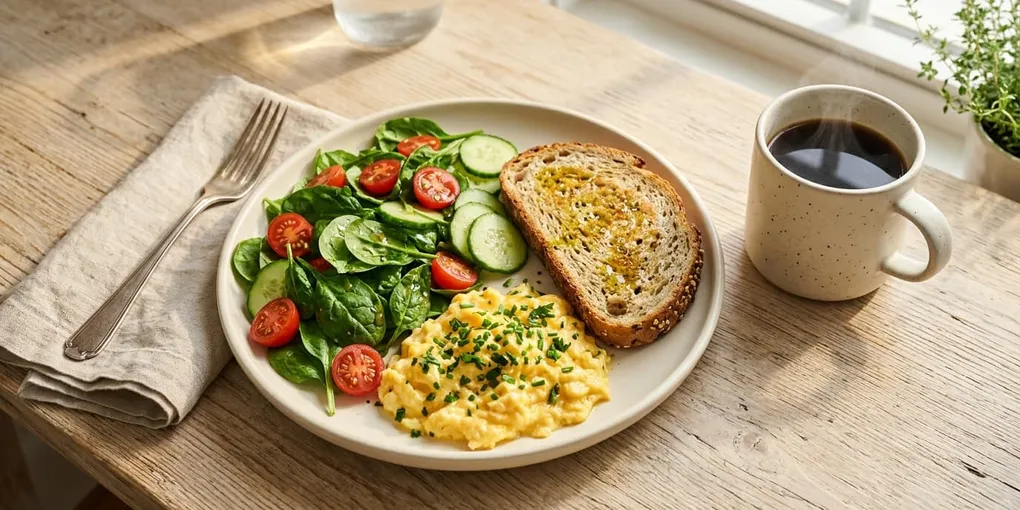
Healthy Plate Breakfast Ideas: 5 Quick 7-Minute Recipes
Ditch morning sugar crashes with the Harvard plate method. Discover 5 quick, balanced breakfast recipes ready in under 7 minutes for steady energy.
Most traditional morning meals consist of ninety percent refined carbohydrates that trigger steep insulin surges and mid morning fatigue. The Harvard plate method builds sustained energy by dedicating half the plate to colorful vegetables or berries, one quarter to clean proteins, and one quarter to intact whole grains in seven minutes.
Key Takeaways
- Conventional breakfasts rely heavily on refined flour, processed cereals, and added sugars, provoking reactive hypoglycemia before noon.
- Assembling morning meals according to Harvard plate ratios sustains mental clarity and steady metabolic energy for four to five hours.
- Incorporating raw baby spinach, cherry tomatoes, and sliced cucumbers requires zero active cooking time while supplying essential prebiotic fiber.
- High quality morning proteins such as pastured eggs, Greek yogurt, or tofu suppress ghrelin and elevate circulating satiety hormones.
- Five practical recipes prove that preparing a visually balanced, micronutrient dense breakfast takes seven minutes or less on busy weekdays.
Why Do Conventional Breakfasts Trigger Mid-Morning Energy Crashes?
The modern breakfast landscape is dominated by commercial pastries, sweetened breakfast cereals, and white flour toast with jam. These foods deliver high glycemic starch loads stripped of natural plant fiber. When consumed on an empty stomach, rapid gastric transit floods the bloodstream with glucose. The pancreas reacts by pumping out substantial volumes of insulin to clear the sugar surge.
This aggressive endocrine response leads directly to reactive hypoglycemia between ten and eleven in the morning. As blood glucose plummets below baseline, the brain perceives an acute fuel deficit. Cortisol and adrenaline rise, producing brain fog, irritability, and intense cravings for another sugary snack or coffee.
Conventional Breakfast Cycle:
Sugary Cereal / Pastry -> Rapid Glucose Spike -> Insulin Surge -> Reactive Hypoglycemia -> Mid-Morning Brain Fog
In addition, traditional breakfast options contain negligible dietary fiber and minimal protein. Without protein to trigger satiety hormones and without dietary fiber to slow digestion, the stomach empties within sixty to ninety minutes. By restructuring the morning meal according to our foundational Harvard plate method guide, you establish metabolic equilibrium that lasts until lunchtime.
How Does Morning Protein and Fiber Stabilize Your Metabolism?
Beginning the day with balanced macronutrients fundamentally alters daytime metabolic rhythm. Nutritional science demonstrates that morning food intake sets the circadian sensitivity of peripheral muscle tissue and liver receptors for subsequent meals.
When you balance your morning plate with ample vegetables and bioavailable protein, three physiological events occur:
- Gastric Retention and Delayed Digestion: Viscous soluble fiber absorbs fluid, slowing the rate at which chyme passes through the pyloric sphincter into the duodenum.
- Satiety Peptide Secretion: Protein peptides stimulate the enteroendocrine L-cells of the ileum, releasing peptide YY and GLP-1 directly into circulation.
- Appetite Hormone Suppression: High protein intake suppresses circulating ghrelin, extinguishing intrusive thoughts about snacking throughout the work morning.
Plate Balanced Digestion:
Protein + Raw Fiber -> Slow Gastric Emptying -> Blunted Glucose Curve -> 5 Hours Satiety
Consuming twenty to thirty grams of morning protein prevents muscle catabolism while improving insulin sensitivity for the remainder of the day, an advantage highlighted in our guide to optimal Harvard plate protein sources.
How Do Standard Breakfasts and Plate Method Breakfasts Compare?
Evaluating morning meals through functional biomarkers reveals striking differences in daily cognitive and physical performance.
The following comparative table contrasts a typical morning routine against a plate balanced breakfast:
| Performance Marker | Standard Continental Breakfast | Harvard Plate Balanced Breakfast |
|---|---|---|
| Macronutrient Split | 80% refined carbs, 12% fat, 8% protein | 50% fiber rich vegetables/fruit, 25% protein, 25% complex carbs |
| Dietary Fiber Content | Under 2 grams per meal | 8 to 12 grams per meal |
| Morning Glucose Peak | Sharp spike above 140 mg/dL | Gentle, flattened curve under 115 mg/dL |
| Mid-Morning Energy | Sluggishness and mental fatigue | Consistent focus and stable productivity |
| Time to Next Hunger | 90 minutes to 2 hours | 4 to 5 hours of calm satiety |
| Preparation Time | 2 minutes (box to bowl) | 5 to 7 minutes with real foods |
Investing five additional minutes in morning food preparation pays massive dividends in mental sharpness and metabolic composure.
What Are 5 Quick 7-Minute Breakfast Recipes Following the Plate Method?
Creating a nutrient rich morning plate does not require rising an hour before sunrise. By relying on fast cooking staples, raw crunchy vegetables, and pre-prepped grains, you can assemble any of these five vibrant meals in seven minutes or less.
1. Herb Scrambled Eggs with Baby Spinach and Sourdough Toast
Whisk three pastured eggs with a pinch of sea salt and black pepper. Melt a teaspoon of olive oil in a skillet over medium heat, pour in the eggs, and stir gently for two minutes until softly set. Plate the golden eggs across one quarter of your dish. Toast one thick slice of artisan sourdough bread for your complex carbohydrate quarter. Fill the entire remaining half of the plate with washed baby spinach, sliced Persian cucumbers, and sweet cherry tomatoes drizzled with cold pressed olive oil.
Scramble Plate Architecture:
[ 1/2 Plate: Raw Baby Spinach, Persian Cucumbers & Cherry Tomatoes ]
[ 1/4 Plate: 3 Soft Scrambled Pastured Eggs with Fresh Herbs ]
[ 1/4 Plate: 1 Thick Slice Toasted Sourdough Bread ]
2. Savory Whipped Cottage Cheese Bowl with Berries and Chia
Scoop one cup of rich whole milk cottage cheese or thick unsweetened Greek yogurt onto your plate as your primary protein source. Top with a tablespoon of chia seeds and hemp hearts. Fill one quarter of the plate with rolled oats toasted in a dry pan with cinnamon. Dedicate the entire remaining half of the plate to fresh blackberries, raspberries, and wild blueberries. This dish offers over thirty grams of complete protein without turning on a stove.
Cottage Cheese Plate Architecture:
[ 1/2 Plate: Fresh Blackberries, Raspberries & Wild Blueberries ]
[ 1/4 Plate: Whole Milk Cottage Cheese with Chia Seeds ]
[ 1/4 Plate: Dry Toasted Rolled Oats with Cinnamon ]
3. Mediterranean Feta Omelet with Crisp Cucumber Salad
Beat two whole eggs with two egg whites for an optimal protein density. Pour into a hot pan, sprinkle thirty grams of crumbled Greek feta cheese and chopped dill over the top, and fold after three minutes. Slide the omelet onto one quarter of your plate. Warm half a whole wheat pita pocket for the carbohydrate quadrant. Heap the remaining half of the plate with diced cucumbers, Kalamata olives, and fresh bell peppers.
Mediterranean Plate Architecture:
[ 1/2 Plate: Diced Cucumbers, Kalamata Olives & Sweet Bell Peppers ]
[ 1/4 Plate: Folded Feta Omelet with Fresh Dill ]
[ 1/4 Plate: 1/2 Whole Wheat Pita Pocket ]
4. Smashed Avocado Toast with Jammy Eggs and Garden Radishes
Boil two large eggs for six and a half minutes until the yolks are jammy, then plunge into cold water and peel. Toast a slice of dense rye bread and smash one third of a ripe avocado on top. Slice the eggs and arrange them over the toast. Fill the other fifty percent of the plate with peppery arugula, thinly sliced red radishes, and grated carrots dressed with lemon juice.
Avocado Toast Plate Architecture:
[ 1/2 Plate: Peppery Arugula, Sliced Radishes & Grated Carrots ]
[ 1/4 Plate: 2 Soft Boiled Eggs with Flaky Salt ]
[ 1/4 Plate: Dense Rye Bread with Smashed Avocado ]
5. 5-Minute Savory Quinoa Warm Bowl
Utilize leftover batch cooked quinoa from your refrigerator, as detailed in our guide on batch cooking and meal prep with the plate method. Reheat three quarters of a cup of quinoa in the microwave for one minute. Fry two sunny side up eggs in olive oil until the whites are crisp. Place the quinoa in one quadrant and the eggs in the adjacent quadrant. Fill the rest of the bowl with baby kale, shredded red cabbage, and pickled onions.
Quinoa Bowl Architecture:
[ 1/2 Bowl: Baby Kale, Shredded Red Cabbage & Pickled Onions ]
[ 1/4 Bowl: 2 Sunny Side Up Crispy Fried Eggs ]
[ 1/4 Bowl: Warm Pre-Cooked Quinoa with Olive Oil ]
These meals deliver the golden proportion of fifty percent vegetables and fruit for dietary fiber, proving that real food requires minimal weekday morning effort.
How Can You Organize Your Kitchen for Effortless Morning Assembly?
Speed in the kitchen is not a matter of frantic rushing. It is the natural consequence of thoughtful kitchen staging and intelligent ingredient selection.
Adopting three simple habits will reduce your morning cooking time to under five minutes:
- Pre-Washed Salad Greens: Keep containers of pre-washed baby spinach, wild arugula, and mixed greens in your refrigerator crisper drawer so vegetables can be transferred directly to the plate with tongs.
- Batch Cooked Whole Grains: Cook a batch of quinoa, farro, or steel cut oats on Sunday evening, storing them in sealed glass containers ready for instant morning reheating.
- Standardized Protein Stations: Keep quality eggs, smoked salmon, high protein cottage cheese, or vacuum sealed tofu bricks front and center on the main refrigerator shelf.
Kitchen Staging Flow:
Pre-Washed Greens Grabbed -> Quick Protein Cooked -> Pre-Cooked Carb Reheated -> 7-Minute Balanced Plate
With these elements accessible, assembling a Harvard plate breakfast becomes as fast as pouring milk over commercial cereal flakes, while offering vastly superior metabolic benefits.
Frequently Asked Questions
What if I cannot tolerate vegetables first thing in the morning?
If raw vegetables feel unappealing upon waking, fulfill the fifty percent plant sector with fresh, low glycemic fruits such as blackberries, blueberries, strawberries, or sliced green apples. Alternatively, sauté mild greens like baby spinach into your scrambled eggs, which drastically shrinks vegetable volume while preserving fiber and micronutrients.
Can I drink fruit juice as the vegetable or fruit half of the plate?
Fruit juice lacks the intact cell wall structure of whole fruit and contains zero insoluble fiber. Drinking juice results in rapid fructose absorption that spikes hepatic portal glucose. Always consume whole, unblended fruits and vegetables to preserve natural gastric buffering.
How many eggs can I safely eat for breakfast each day?
Extensive cardiovascular research confirms that dietary cholesterol from whole eggs does not adversely impact serum LDL particle concentration in healthy adults. Consuming two to three whole eggs daily provides essential choline, lutein, and complete amino acids without elevating cardiovascular disease risk.
Is oatmeal alone a balanced plate method breakfast?
Oatmeal prepared solely with water or plant milk consists almost entirely of carbohydrates. To align it with the plate method, reduce the oatmeal portion to one quarter of your bowl, add a scoop of unsweetened protein powder or egg whites for the protein sector, and top the remaining half of the bowl with abundant fresh berries and ground flaxseed.
Master Morning Energy and Vitality With PlateTracker
Starting your morning with stable energy sets the tone for your entire day. You do not need complicated diets or tedious weighing to fuel your productivity.
Upgrade your morning routine with effortless visual awareness. Visit PlateTracker, snap a photo of your breakfast plate, and let intelligent computer vision confirm your nutritional balance in seconds.
Sources and Scientific References
- Rolls, B. J. (2014). What is the role of portion control in weight management? International Journal of Obesity, 38(Suppl 1), S1-S8.
- Leidy, H. J., et al. (2013). Beneficial effects of a higher-protein breakfast on the appetitive, hormonal, and neural signals to control food intake in overweight/obese, breakfast-skipping, late-adolescent girls. American Journal of Clinical Nutrition, 97(4), 677-688.
- Harvard T.H. Chan School of Public Health (2011). The Healthy Eating Plate: Visual Proportions and Nutritional Guidelines. Department of Nutrition, Harvard University.
- Jenkins, D. J., et al. (2008). Effect of a low-glycemic index or a high-cereal fiber diet on type 2 diabetes: a randomized trial. JAMA, 300(23), 2742-2753.
- Jakubowicz, D., et al. (2013). High caloric intake at breakfast vs. dinner differentially influences weight loss of overweight and obese women. Obesity, 21(12), 2504-2512.
Check Your Plate Balance by Photo
Snap your meal in PlateTracker. AI determines Harvard Plate proportions and nutrients in 3 seconds without scales.