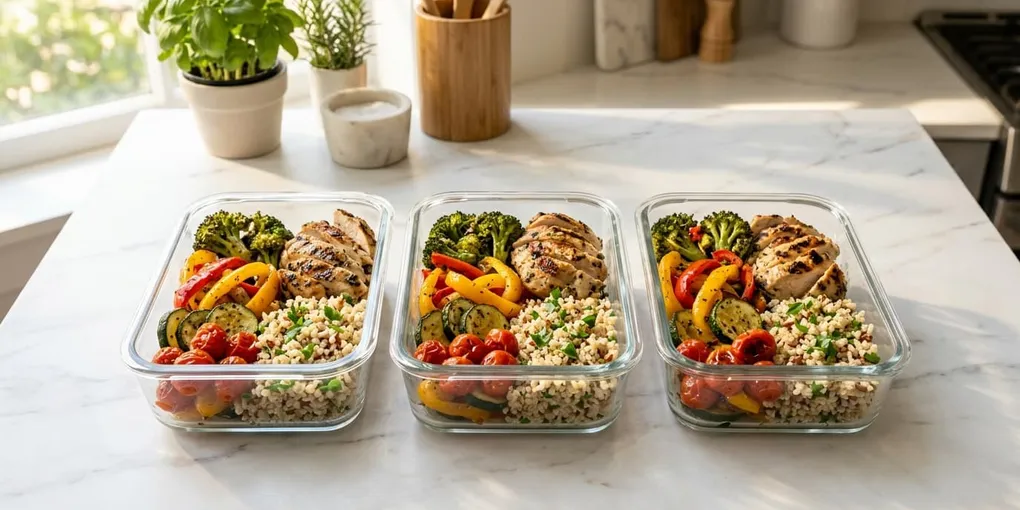
Meal Prep by the Plate Method: Cook for 3 Days in 45 Minutes
Dreading Sunday meal prep? Learn how to cook 3 days of healthy meals in under 45 minutes using the Harvard plate modular method without food scales.
Key Takeaways
- Prepare components, not finished recipes: Cooking bulk modular elements prevents soggy reheated meals and eliminates midweek flavor boredom.
- Master the parallel kitchen workflow: Roasting two sheet pans in the oven while simmering grains on the stovetop condenses your cooking time to under 45 minutes.
- Visual assembly in thirty seconds: Fill half of each glass container with roasted produce, one quarter with protein, and one quarter with whole grains without using kitchen scales.
- The safe 3-day storage window: Keep prepped containers in an airtight glass container below 4 degrees Celsius to preserve crisp texture and nutritional integrity.
Meal prep using the Harvard plate method relies on batch modular components rather than complex composite recipes: roast one sheet pan of mixed vegetables, bake one sheet pan of seasoned lean protein, and simmer one pot of whole grains simultaneously. Assembling an individual balanced meal box takes thirty seconds without measuring scales or complicated culinary techniques.
Traditional meal prep often feels like a second full-time job. You browse social media feeds, see fitness influencers spending five hours every Sunday grilling twenty identical chicken breasts, and immediately feel discouraged. Eating the exact same dry casserole four days in a row is an unsustainable strategy that quickly leads to takeout cravings. Fortunately, you do not need to spend your entire weekend in the kitchen. By applying the visual geometry of the Harvard Healthy Eating Plate guide, discovering new ways of filling 50 percent of your plate with vegetables, selecting diverse healthy protein sources, and using smart strategies when eating at an office cafeteria, you can prepare three full days of vibrant, high-energy lunches in just 45 minutes.
Why Does Traditional Meal Prep Fail Most Busy People?
Traditional meal prep fails most busy people because it demands excessive weekend time, produces soggy single-flavor dishes, and triggers psychological resistance against repetitive eating.
When beginners attempt meal prep, they usually follow bodybuilder protocols designed for extreme caloric restriction. They choose one complex recipe, prepare eight giant servings, and divide them into identical plastic tubs. By Wednesday afternoon, three predictable obstacles destroy their motivation:
- Sensory fatigue: Human appetite is regulated by sensory-specific satiety. When you consume identical textures and seasonings for three consecutive days, your brain seeks novel sensory stimulation, leading directly to impulse snacking and office pastry consumption.
- Textural degradation: Fully assembled meals stored with sauces turn mushy within 48 hours. Steamed vegetables release excess moisture, making grilled chicken rubbery and grains watery.
- The weekend time sink: Spending four hours washing dishes, calculating macro budgets, and standing over hot pans drains the energy you need for weekend rest.
The modular Harvard plate approach eliminates all three problems. Instead of preparing finished casseroles, you cook three neutral foundation blocks: roasted sheet pan vegetables, clean baked protein, and a staple whole grain. You assemble each container with fresh sauces and seasonings right before leaving for work, giving you three completely distinct culinary experiences from a single brief cooking session.
What Is the 45-Minute Modular Kitchen Strategy?
The 45-minute modular kitchen strategy works by utilizing parallel cooking equipment: your oven handles roasting vegetables and baking protein simultaneously, while your stovetop cooks intact whole grains unattended.
The secret to ultra-fast meal prep is eliminating sequential steps. If you fry chicken in a skillet, wash the pan, saute broccoli, and then boil rice, you will easily spend ninety minutes on meal preparation. By using the oven as your primary culinary engine, you achieve massive throughput with almost zero active monitoring:
| Component Category | Target Plate Sector | Ideal Ingredients for 3 Days | Equipment Used | Active Prep Time | Total Cooking Time |
|---|---|---|---|---|---|
| High-fiber produce | 50% of container | Broccoli florets, zucchini coins, bell pepper strips, red onions | Oven Sheet Pan A | 10 minutes | 25 minutes at 200°C |
| Lean protein anchor | 25% of container | Chicken breast cutlets, turkey tenders, salmon fillets, or firm tofu cubes | Oven Sheet Pan B | 5 minutes | 20 minutes at 200°C |
| Intact complex carbs | 25% of container | Quinoa, whole-grain bulgur, brown rice, or buckwheat | Medium lidded saucepan | 2 minutes | 18 minutes simmering |
| Fresh finishing accents | Micronutrient boost | Fresh lemon wedges, extra virgin olive oil, pumpkin seeds, microgreens | Countertop | 3 minutes | 0 minutes (added raw) |
Because both sheet pans roast in the oven while the grains simmer on the stove, your active cooking time is compressed into the first ten minutes of slicing and seasoning.
How Do You Execute the 45-Minute Prep Step by Step?
You execute the 45-minute prep step by step through a disciplined kitchen timeline that groups knife work, uses simultaneous heat sources, and organizes rapid container packing.
Follow this precise minute-by-minute protocol on Sunday evening or Wednesday night:
Minutes 0 to 5: Oven and Water Setup
- Preheat your oven to 200 degrees Celsius (fan-assisted setting).
- Line two large baking sheets with unbleached parchment paper to eliminate pan scrubbing later.
- Place a medium saucepan with two cups of water and half a teaspoon of salt on high heat.
Minutes 5 to 15: Fast Vegetable and Protein Slicing
- Cut two medium zucchini into thick half-moons, chop one head of broccoli into bite-sized florets, and slice one red onion into wedges. Toss them directly on Sheet Pan A with one tablespoon of olive oil, salt, garlic powder, and dried oregano.
- Take 500 grams of chicken breast or firm tofu blocks, slice them into uniform cutlets, and place them on Sheet Pan B. Season with smoked paprika, black pepper, and a pinch of cumin.
- Measure one cup of rinsed quinoa or buckwheat groats, pour into the boiling saucepan, reduce the heat to low, and cover with a tight-fitting lid.
Minutes 15 to 35: The Hands-Free Cooking Window
- Slide both sheet pans into the preheated oven: Sheet Pan A on the upper rack, Sheet Pan B on the middle rack. Set a timer for 20 minutes.
- While the oven and stovetop do the physical work, wash your cutting board and chef knife. This takes exactly three minutes, leaving your sink completely clean.
- Prepare three clean glass meal containers with airtight locking lids on your counter.
Minutes 35 to 45: Assembly and Storage
- When the timer rings, check that the chicken has reached an internal temperature of 74 degrees Celsius. Remove both baking sheets from the oven.
- Remove the saucepan lid: the whole grains should have absorbed all water and become tender. Fluff with a fork.
- Using tongs, fill half of each container with the roasted vegetables, one quarter with sliced protein, and one quarter with the cooked whole grains. Let the containers cool to room temperature before snapping the lids shut and transferring them to your refrigerator.
How Do You Mix and Match 3 Days of Distinct Meals?
You mix and match three days of distinct meals by using different quick dressings, condiments, and seeds on your identical prepped foundation blocks.
Even though you cooked the same base ingredients, your meals never taste identical. Here is how three prepped containers transform into three culturally distinct lunches throughout your work week:
Day 1: Mediterranean Herb Lunch Box
- Prepped Base: Roasted zucchini and broccoli (50%), sliced herb chicken breast (25%), fluffy quinoa (25%).
- Quick 10-Second Upgrade: Drizzle with one teaspoon of extra virgin olive oil, squeeze fresh lemon juice over the top, and sprinkle with a spoonful of crumbled feta cheese and kalamata olives.
- Flavor Profile: Fresh, bright, and savory with rich Mediterranean aromas.
Day 2: Smoky Southwest Chipotle Bowl
- Prepped Base: Roasted bell peppers and broccoli (50%), sliced chicken breast (25%), fluffy quinoa (25%).
- Quick 10-Second Upgrade: Add two tablespoons of chunky tomato salsa, two tablespoons of rinsed black beans, a quarter of a fresh avocado, and a dash of ground cayenne pepper.
- Flavor Profile: Zesty, spicy, and satisfying with healthy monounsaturated fats.
Day 3: Asian Sesame Ginger Power Plate
- Prepped Base: Roasted zucchini and red onions (50%), sliced chicken breast (25%), fluffy quinoa (25%).
- Quick 10-Second Upgrade: Drizzle with one teaspoon of toasted sesame oil, a dash of low-sodium tamari soy sauce, a squeeze of lime juice, and a sprinkle of toasted sesame seeds.
- Flavor Profile: Deep umami, nutty, and vibrant with warming ginger notes.
What Are the Essential Food Safety and Storage Rules for 3-Day Meal Prep?
Essential food safety and storage rules require using non-porous glass containers, cooling food promptly before refrigeration, and keeping temperatures consistently below 4 degrees Celsius.
Cooking meals in advance requires basic awareness of food microbiology. If you leave warm food at room temperature for hours or store meals in scratched plastic containers, bacterial proliferation can ruin your prep. Follow these evidence-based safety parameters:
- The two-hour cooling rule: Hot food should cool to room temperature for approximately twenty minutes before going into the fridge. Never let cooked food sit on the counter longer than two hours, as bacterial growth accelerates between 5 and 60 degrees Celsius.
- Choose borosilicate glass: Plastic tubs degrade over time, retain persistent food odors, and leach endocrine-disrupting chemicals when reheated in office microwaves. High-quality glass containers with silicone gaskets provide an airtight seal that keeps vegetables crisp for up to four full days.
- Reheat thoroughly: When ready to eat at work, reheat your meal until it is steaming hot throughout, or enjoy it chilled as a refreshing grain and roast vegetable salad.
- Store dressings separately: If you use liquid dressings containing vinegar or lemon juice, keep them in miniature 30-milliliter dressing pots and pour them over the food right before eating to prevent greens from wilting.
How Does Visual Verification Replace Kitchen Scales During Meal Prep?
Visual verification replaces kitchen scales during meal prep by using container volume boundaries to ensure proper nutritional density effortlessly.
When you divide a rectangular container into clear geometric sectors, calculating grams becomes completely obsolete. The container walls act as natural portion delimiters:
- Half the container volume: Packed with roasted produce, ensuring you reach the clinically proven target of 25 to 30 grams of dietary fiber daily.
- One quarter volume: Filled with clean lean protein, providing approximately 25 to 35 grams of essential amino acids per meal to stimulate muscle protein synthesis and maintain prolonged satiety.
- One quarter volume: Filled with complex intact carbohydrates, delivering steady glycogen restoration without insulin spikes.
To confirm that your prepared meals hit the gold standard of balanced nutrition, you can snap a quick photo using the PlateTracker web app. PlateTracker uses computer vision to analyze your meal box in three seconds, verifying your Harvard plate proportions directly in your browser without requiring food scales or manual ingredient searches.
Frequently Asked Questions About Meal Prep by the Plate Method
Can I prep food for five days instead of three?
While grains and cooked beef can last up to five days, delicate vegetables like broccoli and zucchini lose their crispness and fresh flavor after day three. Prepping for three days ensures peak culinary enjoyment and eliminates any risk of bacterial spoilage. If you need meals for Thursday and Friday, run a second 45-minute cooking cycle on Wednesday evening.
What if I do not have two oven baking sheets?
If you only own one baking sheet, you can cook your vegetables and protein on the same large tray by dividing the surface down the middle with a fold of aluminum foil. Alternatively, roast your vegetables in the oven while pan-searing your protein in a non-stick skillet on the stovetop.
Can I use frozen vegetables for 45-minute meal prep?
Yes, frozen broccoli florets, green beans, and bell pepper strips roast exceptionally well. Do not thaw them before cooking: toss the frozen vegetables directly with olive oil and spices, spread them in a single layer on your hot baking sheet, and roast at 210 degrees Celsius for 20 to 25 minutes until lightly browned.
How do I prevent prepped chicken from drying out in the fridge?
The most common mistake is overcooking poultry during the initial bake. Use a digital meat thermometer and pull the chicken from the oven the moment the thickest portion reaches 74 degrees Celsius. Slice the meat only after it rests for five minutes, and store it tightly covered so moisture remains trapped.
Sources
- Harvard T.H. Chan School of Public Health. The Healthy Eating Plate. Harvard University, Boston, MA.
- United States Department of Agriculture (USDA). Food Safety and Inspection Service: Cooking for Groups Guidelines. Washington, DC.
- Rolls, B. J. (2014). Dietary energy density: Applying behavioural science to weight management. Nutrition Bulletin, 39(1), 36-43.
- European Food Safety Authority (EFSA). Scientific Opinion on Dietary Reference Values for carbohydrates and dietary fibre. EFSA Journal, 8(3), 1462.
- Wansink, B., & Sobal, J. (2007). Mindless Eating: The 200 Daily Food Decisions We Overlook. Environment and Behavior, 39(1), 106-123.
Check Your Plate Balance by Photo
Snap your meal in PlateTracker. AI determines Harvard Plate proportions and nutrients in 3 seconds without scales.