Office Cafeteria and Business Lunch: How to Assemble a Balanced Plate from Prepared Foods
Struggling to eat healthy at work? Learn how to assemble a balanced Harvard plate in any office cafeteria or business lunch without food scales or meal prep.
Key Takeaways
- Deconstruct prepared meals: Avoid mixed casseroles, heavy pasta bakes, and mayo-laden salads where fats and refined starches hide unnoticed.
- The double-green rule: Ask cafeteria staff for a double serving of steamed vegetables or raw cabbage salad to guarantee half of your tray is high-fiber produce.
- Choose standalone proteins: Opt for grilled chicken, baked fish, or stewed lean cuts instead of breaded cutlets, fried schnitzels, or battered nuggets.
- Clean carbs without heavy sauce: Pick whole grains such as buckwheat, brown rice, or boiled baby potatoes, and politely decline creamy flour-thickened gravies.
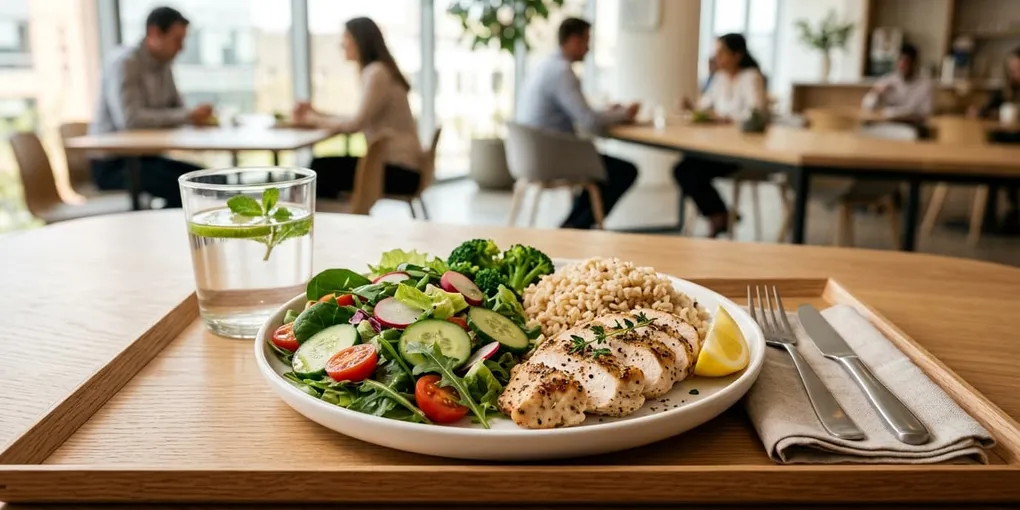
In an office cafeteria or business lunch, choose simple standalone components rather than mixed casseroles or mayo salads. Fill half your plate with two portions of raw or steamed vegetables, select one palm-sized portion of grilled or baked protein without thick batter, and take a fist-sized scoop of plain whole grains without heavy gravy.
Eating healthy in an office setting often feels like navigating a minefield. You step away from your desk after three hours of intense meetings, walk into the company cafeteria or a neighborhood bistro, and face a counter filled with breaded schnitzels, cream sauces, and mayo-drenched salads. If you try to bring your own lunch boxes every single morning, early wake-up routines and kitchen cleanup can quickly become overwhelming. Fortunately, applying the visual proportions of the Harvard Healthy Eating Plate guide allows you to turn almost any buffet line into a nourishing meal. By pairing simple visual rules with the ease of dining out at restaurants, selecting solid healthy protein sources, and snapping a quick image with a photo food diary, you can maintain peak energy and focus throughout your entire afternoon.
Why Is Cafeteria Food a Hidden Trap for Balanced Nutrition?
Cafeteria food presents hidden nutritional traps because commercial food services prioritize long shelf life, rapid batch cooking, and palatability by adding excess refined fats, sugar, and sodium.
When you prepare food at home, you control every teaspoon of olive oil and every pinch of salt. Commercial kitchens operate under completely different incentives. A cafeteria chef needs food to hold heat on a steam table for two hours without drying out. The easiest culinary techniques to achieve this are deep frying, thick breading, heavy cheese toppings, and starch-thickened gravies.
Consider the composition of typical corporate lunch selections:
- Hidden fats in seemingly light salads: That bowl of shredded cabbage or grated carrots seems virtuous until you realize it is bound together with cheap mayonnaise or heavily sweetened dressings. A modest side salad can silently introduce 300 extra calories from seed oils.
- The starch-dominated meat portion: Traditional canteen cutlets and meatballs often contain up to 50 percent white breadcrumbs, flour, and processed pork fat to reduce ingredient costs.
- Flour-thickened sauces and gravies: Ladling dark brown gravy or cheese sauce over boiled potatoes coats clean carbohydrates in refined flour and saturated fat.
- The carbohydrate crowding effect: Because pasta, white rice, and potatoes are inexpensive and quick to serve, cafeteria staff routinely fill 70 percent of your tray with cheap starches while skimping on fresh vegetables and lean protein.
Recognizing these structural traps is the first step toward reclaiming control over your midday nutrition. You do not need to avoid the cafeteria completely. Instead, you need a reliable mental filter when inspecting the serving counter.
How Do You Apply the 50-25-25 Rule at a Buffet Line?
You apply the 50-25-25 rule at a buffet line by mentally dividing your plate before picking up tongs and actively selecting standalone ingredients that correspond to each visual sector.
The Harvard Healthy Eating Plate provides an intuitive visual framework: 50 percent vegetables and fruits, 25 percent high-quality protein, and 25 percent intact whole grains. Here is how to execute this blueprint systematically along the hot and cold lines of any office canteen:
Step 1: Start at the Salad Bar (The 50 Percent Green Foundation)
Before you look at the hot dishes, visit the fresh salad station. Look for simple, unmixed components: sliced cucumbers, cherry tomatoes, fresh shredded cabbage, radishes, grated carrots, and leafy greens.
Take two distinct vegetable choices to fill half of your plate. If the cold salad bar offers only mayonnaise salads, move to the hot station and look for steamed broccoli, grilled zucchini, roasted bell peppers, or braised green beans. If dressings are pre-mixed, ask for fresh lemon wedges or a modest drizzle of olive oil.
Step 2: Choose Your Protein Anchor (The 25 Percent Muscle Sector)
Next, identify your protein source. Look for items where you can clearly see the original muscle grain or whole food structure:
- Baked, roasted, or grilled chicken breast or turkey fillet.
- Steamed or pan-seared white fish, salmon, or trout.
- Braised lean beef goulash or stewed chicken thighs without thick flour sauce.
- Hard-boiled eggs or tofu stir-fry if you follow a plant-based diet.
Avoid items coated in golden breading, sausages, processed luncheon patties, and creamy casseroles. If the chef places sauce over the meat by default, politely ask for your portion without gravy or request the sauce in a small side container.
Step 3: Select Clean Complex Carbohydrates (The 25 Percent Energy Sector)
Finally, allocate one quarter of your plate to complex carbohydrates. The goal is to provide sustained glucose to your brain without triggering a mid-afternoon energy crash:
- Excellent choices: Steamed buckwheat, brown rice, whole-grain bulgur, boiled red or fingerling potatoes with skins, or steamed lentils.
- Acceptable choices: Plain boiled white rice or whole wheat pasta without cream sauces.
- Choices to limit: French fries, deep-fried croquettes, instant mashed potatoes loaded with butter powder, and white hamburger buns.
What Are 5 Proven Combinations for a Balanced Office Lunch?
Five proven combinations for a balanced office lunch demonstrate how everyday canteen staples easily satisfy Harvard plate proportions when combined correctly.
To make lunch assembly effortless, here are five practical plate setups you can order in virtually any corporate dining facility, university canteen, or business lunch bistro:
Combination 1: The Classic Canteen Fish Plate
- Vegetables (50%): A generous mound of fresh shredded white and red cabbage salad dressed with lemon juice, plus half a cup of steamed green peas.
- Protein (25%): Baked cod or pollock fillet seasoned with black pepper and herbs.
- Carbohydrates (25%): Steamed whole buckwheat groats or two small boiled baby potatoes.
- Nutritional benefit: High in omega-3 fatty acids, extremely lean protein, and packed with gut-friendly prebiotic fiber from cabbage.
Combination 2: The Mediterranean Poultry Bowl
- Vegetables (50%): Roasted ratatouille (eggplant, zucchini, tomatoes, and bell peppers) baked with olive oil and oregano.
- Protein (25%): Grilled skinless chicken breast fillet.
- Carbohydrates (25%): Steamed brown rice or whole-grain bulgur.
- Nutritional benefit: Rich in antioxidants, lycopene, and complete branch-chain amino acids to preserve lean muscle tissue.
Combination 3: The Hearty Beef and Barley Tray
- Vegetables (50%): Crisp garden salad of cucumbers, radishes, and mixed field greens, plus steamed broccoli florets.
- Protein (25%): Slow-cooked lean beef chunks, spooned out with minimal gravy.
- Carbohydrates (25%): Steamed pearl barley or cooked quinoa.
- Nutritional benefit: Excellent source of bioavailable heme iron and zinc, combined with beta-glucan soluble fiber that helps stabilize blood glucose.
Combination 4: The Plant-Based Power Plate
- Vegetables (50%): Sliced tomatoes, shredded carrots, and dark leafy spinach.
- Protein (25%): Braised chickpeas or edamame beans combined with grilled firm tofu cubes.
- Carbohydrates (25%): Whole-grain couscous or boiled wild rice.
- Nutritional benefit: Completely plant-derived meal rich in potassium, folate, and complete plant proteins when grains and legumes are paired.
Combination 5: The Quick Grab-and-Go Deli Lunch
- Vegetables (50%): Pre-packed garden bowl with cherry tomatoes, baby cucumbers, and fresh mixed herbs.
- Protein (25%): Two peeled hard-boiled eggs or a can of solid light tuna in spring water.
- Carbohydrates (25%): Two slices of dark whole-grain rye sourdough bread.
- Nutritional benefit: Ideal when you have less than ten minutes between calls and need quick, reliable nourishment without kitchen equipment.
What Are the Most Common Cafeteria Traps and Their Smart Swaps?
The most common cafeteria traps involve disguised cooking fats, deceptive side dishes, and sugary beverages that sabotage nutrition while masquerading as innocent meal items.
The following table provides direct, actionable swaps to help you navigate standard cafeteria options:
| Cafeteria Trap | Why It Derails Balance | Smart Harvard Plate Swap | Expected Nutritional Advantage |
|---|---|---|---|
| Breaded fried pork schnitzel | Breading absorbs deep-frying oil, adding 300 kcal of refined fat | Grilled chicken breast or baked white fish fillet | Cuts excess fat by 70%, delivers pure complete protein |
| Shredded carrot salad with sweet mayo | Commercial mayonnaise adds refined sugar and high-omega-6 seed oils | Fresh grated carrots with lemon juice and a splash of olive oil | Eliminates hidden industrial trans fats, retains beta-carotene |
| Mashed potatoes with butter cream | Often prepared with hydrogenated fat and milk powders, causing rapid glucose spikes | Boiled baby potatoes with skin or steamed whole buckwheat | Delivers resistant starch, lowers overall glycemic index |
| Cream of mushroom soup | Thickened with white wheat flour and heavy cream, very low in fiber | Clear vegetable broth or lentil soup | High volume hydration, packed with plant micronutrients |
| Fruit juice or sweetened fruit compote | Liquid fructose without fiber, driving a sharp insulin surge | Sparkling water with fresh lemon slice or unsweetened green tea | Zero sugar crash, optimal hydration during afternoon work |
| Pasta bake with three cheeses | Refined flour base overwhelmed by melted saturated fats, minimal protein | Whole grain pasta with simple tomato pomodoro and grilled meat | Provides clean glycogen replenishment without heavy lethargy |
How Does a 3-Second Plate Photo Keep You Accountable at Work?
A 3-second plate photo keeps you accountable at work by creating a mindful pause before you eat, replacing stressful food scales with visual pattern recognition.
In an office environment, colleagues watch what you do. Pulling a digital food scale out of your briefcase to weigh a scoop of canteen rice feels socially awkward and creates needless stress. Manual calorie logging apps are equally problematic during a short lunch break: searching through databases for an unlisted catering recipe takes five to ten minutes that you would rather spend conversing with teammates.
Taking a quick smartphone photo of your tray solves both dilemmas instantly:
- Socially seamless: Taking a food photo is ubiquitous in modern culture. Your coworkers will simply assume you are appreciating your meal, completely unaware that you are tracking your nutritional balance.
- Instant visual feedback: Looking at the photo on your phone screen reveals your plate balance in three seconds. If your plate looks beige and lacks green, you can simply grab an apple or a side salad before taking your seat.
- Freedom from calorie anxiety: Instead of worrying whether the cafeteria chef used 10 or 15 grams of cooking butter, you focus on the macro-geometry of your plate. If half the tray is filled with vibrant produce, you have already secured the foundation of long-term health.
To make visual tracking completely effortless, you can use the PlateTracker web application. PlateTracker analyzes your meal photo using computer vision to evaluate your Harvard plate proportions in seconds, without requiring app store downloads or tedious gram logging.
Frequently Asked Questions About Healthy Cafeteria Lunches
What should I do if the cafeteria vegetables are cooked in heavy oil?
If the hot vegetable dishes are soaked in visible cooking fat, turn to the cold salad bar and fill half your plate with raw cucumbers, radishes, and fresh greens. Alternatively, ask the kitchen staff for plain steamed vegetables or use a paper napkin to gently blot excess surface oil.
Can I drink fruit juices or traditional canteen compotes?
Traditional compotes and bottled fruit juices contain high amounts of added sugar and lack the intact dietary fiber of whole fruit. Drinking them during lunch causes a rapid spike in blood glucose followed by an energy crash around 3 PM. Choose still water, sparkling water with lemon, or unsweetened herbal tea instead.
What if my company cafeteria only serves combination dishes like lasagna or curries?
When combination dishes are the only option, treat the mixed item as your combined protein and carbohydrate sector, which should occupy half of your plate. Use the remaining half of your plate for a double portion of crisp raw salad without mayonnaise dressing.
How do I handle cafeteria desserts and pastries?
Keep daily work lunches focused on sustained energy rather than sweet treats. If you want dessert, choose a piece of whole fresh fruit like an apple, orange, or a bowl of berries. Save rich pastries and cakes for deliberate weekend celebrations rather than mindless weekday desk snacking.
Sources
- Harvard T.H. Chan School of Public Health. The Healthy Eating Plate. Harvard University, Boston, MA.
- Rolls, B. J. (2014). Dietary energy density: Applying behavioural science to weight management. Nutrition Bulletin, 39(1), 36-43.
- Wansink, B., & Sobal, J. (2007). Mindless Eating: The 200 Daily Food Decisions We Overlook. Environment and Behavior, 39(1), 106-123.
- Deutsche Gesellschaft für Ernährung (DGE). Vollwertig essen und trinken nach den 10 Regeln der DGE. DGE, Bonn.
- Mozaffarian, D. (2016). Dietary and Policy Priorities for Cardiovascular Disease, Diabetes, and Obesity. Circulation, 133(2), 187-225.
Check Your Plate Balance by Photo
Snap your meal in PlateTracker. AI determines Harvard Plate proportions and nutrients in 3 seconds without scales.