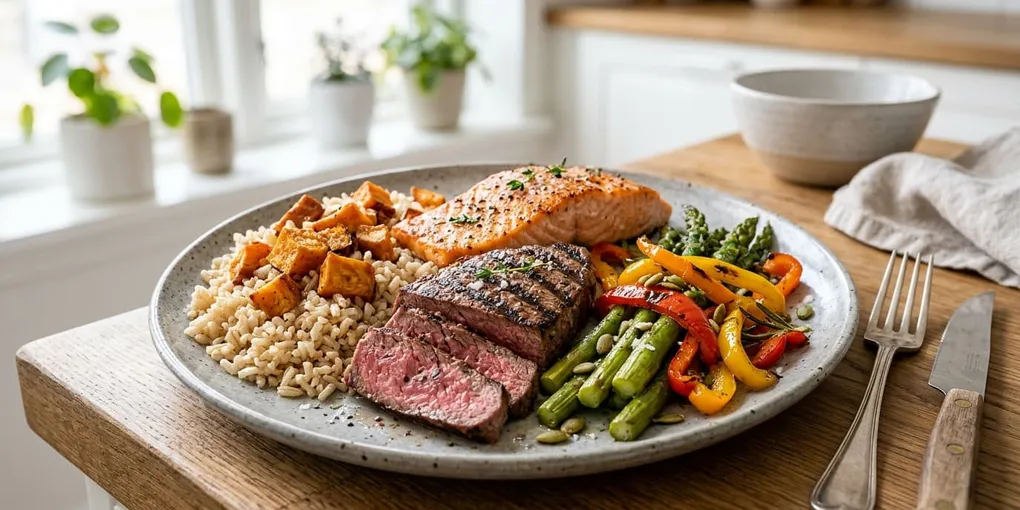
The Harvard Plate for Muscle Gain: Hypertrophy Without Macro Counting
Want to build lean muscle without food scales or dirty bulking? Learn how to adapt Harvard plate ratios for clean hypertrophy, strength, and steady energy.
Key Takeaways
- Adjust proportions for anabolism: Expand complex carbohydrates to 35-40 percent of your plate and maintain high-quality protein at 25-30 percent to fuel muscle growth.
- Moderate vegetable volume strategically: Reduce fibrous raw greens to 30-35 percent of plate area to avoid premature stomach stretching and early fullness.
- Incorporate clean caloric accelerators: Add cold-pressed olive oil, raw nut butters, hemp seeds, and avocados to raise daily caloric intake without inflammatory junk food.
- Visual progression over gram counting: Measure recovery through training performance and visual plate density rather than spending hours typing numbers into tracking spreadsheets.
Yes, you can build lean muscle without counting macros by adjusting the Harvard plate proportions for hypertrophy: shift complex carbohydrates and healthy fats to 35-40 percent, maintain protein at 25-30 percent, and moderate raw vegetables to 30-35 percent to prevent premature gastric fullness.
For decades, fitness subcultures insisted that anyone pursuing muscle hypertrophy must live like an obsessive accountant. Gym enthusiasts were told to weigh every raw chicken breast to the decimal place, calculate daily macronutrient ratios in spreadsheets, or resort to reckless dirty bulking protocols filled with fast food pizzas and milkshakes. Both extremes carry heavy costs: rigid tracking triggers chronic dietary anxiety, while aggressive dirty bulking leads to excessive body fat gain, elevated blood lipids, and sluggish workouts. In reality, modern exercise physiology demonstrates that lean tissue accretion requires a modest caloric surplus and sufficient amino acid availability. By learning the foundational principles of the Harvard Healthy Eating Plate guide, contrasting them with strategies for weight loss and energy restriction, optimizing complete healthy protein sources, and adopting efficient batch meal prep techniques, you can construct an athlete-grade nutrition program without touching a digital kitchen scale.
Why Do Traditional Bulking Diets and Macro Tracking Fail Athletes?
Traditional bulking diets and macro tracking fail athletes because hyper-strict mathematical tracking induces cognitive burnout, while unchecked dirty bulking degrades metabolic health and insulin sensitivity.
Most resistance trainees fall into one of two unsustainable nutritional patterns when trying to gain size:
- The tracking burnout trap: Weighing oats, oils, and meats four times every day introduces friction into daily life. After several months of relentless logging, mental fatigue accumulates. When busy athletes travel or dine socially, unable to calculate exact grams, they experience paralysis and frequently abandon nutritional discipline entirely.
- The dirty bulking trap: Seeking rapid weight gain, many trainees consume ultra-processed junk food under the slogan that calories are just calories. Excessive refined sugars and industrial seed oils trigger systemic low-grade inflammation, promote visceral adipose storage, and impair skeletal muscle insulin signaling.
- The volume paradox of standard health diets: Trainees who attempt to bulk on the standard health plate (50 percent low-calorie vegetables) often fail because the enormous fiber volume physically fills the stomach before energetic requirements are fulfilled.
The adapted athlete plate solves all three dilemmas. It preserves the clean, anti-inflammatory foundation of whole foods while strategically adjusting physical food geometry to deliver the caloric surplus necessary for optimal protein synthesis.
How Do You Modify the Harvard Plate Ratios for Hypertrophy?
You modify the Harvard plate ratios for hypertrophy by expanding the energy sector of complex carbohydrates to roughly 35-40 percent, holding protein steady at 25-30 percent, and gently compressing the vegetable sector to 30-35 percent.
The standard Harvard plate was engineered for sedentary and moderately active adults seeking weight stability and cardiovascular protection. Strength athletes with demanding resistance training sessions require substantially more glycogen restoration and energetic substrate. Here is how the visual sectors shift:
| Plate Sector | Standard Plate Ratio | Hypertrophy Athlete Ratio | Primary Function in Hypertrophy |
|---|---|---|---|
| Complex Carbohydrates | 25% of plate area | 35% to 40% of plate area | Replenishes muscle glycogen, elevates insulin to blunt muscle protein breakdown |
| Quality Protein | 25% of plate area | 25% to 30% of plate area | Supplies leucine and essential amino acids to stimulate muscle protein synthesis |
| Vegetables and Fruits | 50% of plate area | 30% to 35% of plate area | Supplies micronutrients and antioxidants while allowing space for energy density |
| Healthy Caloric Accelerators | Light dressing (1 tsp) | Generous addition (1-2 tbsp) | Delivers clean calories via cold-pressed oils, nuts, seeds, and avocado |
By giving carbohydrates a slightly larger visual footprint and concentrating produce into cooked, denser forms, you easily create a clean 300 to 500 calorie surplus without forcing your stomach to process excessive bulk.
What Are the Best Clean Calorie Accelerators for Muscle Growth?
The best clean calorie accelerators for muscle growth are energy-dense whole foods that enrich meals with healthy fats and complex nutrients without triggering digestive distress.
When training volume increases, eating larger portions of boiled rice or dry potatoes can feel daunting. Clean caloric accelerators allow you to increase total energy intake seamlessly without altering the visual volume on your plate:
1. Cold-Pressed Extra Virgin Olive Oil and Avocado Oil
- How to use: Drizzle one to two tablespoons over roasted vegetables and warm grains immediately after plating.
- Advantage: Adds 120 to 240 clean calories of anti-inflammatory monounsaturated fats that support hormonal production without occupying stomach volume.
2. Whole Avocados
- How to use: Slice half an avocado onto your plate alongside your lunch and dinner proteins.
- Advantage: Delivers potassium, folate, and heart-healthy oleic acid, helping balance electrolytes after heavy training sweating.
3. Nutrient-Rich Nuts and Seeds
- How to use: Sprinkle two tablespoons of raw pumpkin seeds, crushed walnuts, or shelled hemp hearts over your meals.
- Advantage: Rich in zinc, magnesium, and plant-derived omega-3 fats that accelerate muscular repair.
4. Natural Nut and Seed Butters
- How to use: Stir a generous tablespoon of 100 percent peanut or almond butter into your morning oatmeal or grain porridge.
- Advantage: Supplies calorically dense lipids combined with additional arginine and plant protein.
5. Denser Cooked Root Vegetables
- How to use: Substitute fluffy raw salad leaves with roasted sweet potatoes, beets, or butternut squash.
- Advantage: Cooked root vegetables provide high micronutrient density with much less gastric volume than raw leafy greens, facilitating easy digestion.
What Does a Full Day of Athlete Plate Eating Look Like?
A full day of athlete plate eating illustrates how visual portioning supplies ample fuel across three substantial meals and a targeted recovery snack:
Breakfast: The High-Protein Fuel Plate
- Carbohydrates (35%): Rolled oats cooked with whole milk or soy milk, topped with sliced banana and cinnamon.
- Protein (30%): Three whole scrambled eggs with a scoop of Greek yogurt on the side.
- Produce (35%): A generous bowl of fresh blueberries and sliced strawberries.
- Clean Accelerator: One tablespoon of natural peanut butter stirred into the warm oats.
Lunch: The Power Grain and Salmon Box
- Carbohydrates (40%): Fluffy cooked brown rice or whole-grain bulgur.
- Protein (25%): Pan-seared wild salmon fillet or grilled chicken thigh.
- Produce (35%): Steamed broccoli florets and roasted zucchini slices.
- Clean Accelerator: One tablespoon of extra virgin olive oil and a tablespoon of toasted sesame seeds.
Post-Workout Recovery Snack: Quick Glycogen Bridge
- Carbohydrates: Two thick slices of whole-grain sourdough bread with natural fruit preserves.
- Protein: A shake containing 30 grams of whey or pea protein isolate mixed with water or plant milk.
Dinner: The Lean Steak and Sweet Potato Feast
- Carbohydrates (40%): Baked sweet potato wedges seasoned with sea salt and rosemary.
- Protein (30%): Grilled lean beef sirloin steak or baked tempeh.
- Produce (30%): Roasted green asparagus and grilled bell pepper strips.
- Clean Accelerator: Half a sliced avocado served fresh over the vegetables.
What Are the Most Common Muscle Building Mistakes on the Plate Method?
The most common muscle building mistakes on the plate method stem from misjudging satiety signals, neglecting carbohydrate density, and skipping dietary fats.
Avoid these four frequent traps when adapting visual plate balance for strength:
- Overloading on high-volume raw roughage: While raw spinach and celery are fantastic for fat loss, eating massive raw salads before your protein and starches creates rapid stomach distension. Choose cooked, steamed, or roasted vegetables that condense down in volume while retaining full vitamin profiles.
- Fear of healthy fats: Some trainees cling to outdated nineties bodybuilding dogmas that treat all dietary fats as enemies. Hormones such as testosterone depend on adequate dietary cholesterol and essential fatty acids. Omitting clean oils makes gaining mass needlessly difficult.
- Inadequate meal frequency: If your daily energy expenditure is high, attempting to hit your surplus in only two large meals can cause lethargy. Distribute your intake across three balanced athlete plates plus one or two dense snacks.
- Neglecting post-workout hydration: Protein synthesis and glycogen storage require adequate cell hydration. Drink at least two to three liters of water daily, adding electrolytes during hot weather or demanding training blocks.
How Does Visual Verification Support Progressive Nutrition?
Visual verification supports progressive nutrition by providing consistent reference points that allow you to adjust intake based on performance rather than theoretical math.
If your deadlift numbers are climbing, your sleep is restorative, and your body weight is inching upward by 0.5 to 1 kilogram per month, your plate proportions are working. If your body weight stalls for three consecutive weeks, you simply enlarge the carbohydrate sector by a spoonful and add an extra tablespoon of olive oil.
To audit your meals without opening tracking software, take a quick photo of your plate with the PlateTracker web app. PlateTracker analyzes your food proportions in three seconds using computer vision, verifying that your athlete plate hits the right macronutrient balance directly in your browser without kitchen scales.
Frequently Asked Questions About the Plate Method for Muscle Gain
Can I build muscle on a plant-based athlete plate?
Yes. Combine legumes such as lentils, chickpeas, or black beans with intact whole grains like quinoa or brown rice to guarantee a complete amino acid profile. Rely on firm tofu, tempeh, edamame, and seitan for your 25 to 30 percent protein sector, and incorporate hemp seeds and pumpkin seeds for extra clean calories.
Do I need protein shakes if I use the athlete plate method?
Whole food meals should form the backbone of your nutrition. However, a post-workout protein shake is a convenient and practical tool when you cannot sit down for a complete meal within an hour after finishing intense resistance training.
How fast should my body weight increase during a clean bulk?
Aim for a gradual increase of 0.25 to 0.5 percent of your total body weight per week. For an 80-kilogram individual, that equates to roughly 200 to 400 grams weekly. Gaining weight faster usually indicates excess adipose tissue accumulation rather than contractile muscle tissue.
What should I do if I feel too full to finish my plate?
Shift your food choices toward greater caloric density. Replace bulky boiled potatoes with roasted sweet potatoes, cook your grains in bone broth, and use an extra tablespoon of cold-pressed oil or seed butter rather than forcing yourself to eat larger physical volumes.
Sources
- Harvard T.H. Chan School of Public Health. The Healthy Eating Plate. Harvard University, Boston, MA.
- Morton, R. W., et al. (2018). A systematic review, meta-analysis and meta-regression of the effect of protein supplementation on resistance training-induced gains in muscle mass and strength in healthy adults. British Journal of Sports Medicine, 52(6), 376-384.
- Helms, E. R., et al. (2014). Evidence-based recommendations for natural bodybuilding contest preparation: nutrition and supplementation. Journal of the International Society of Sports Nutrition, 11, 20.
- Schoenfeld, B. J., & Aragon, A. A. (2018). How much protein can the body use in a single meal for muscle-building? Implications for daily protein distribution. Journal of the International Society of Sports Nutrition, 15, 10.
- Rolls, B. J. (2014). Dietary energy density: Applying behavioural science to weight management. Nutrition Bulletin, 39(1), 36-43.
Check Your Plate Balance by Photo
Snap your meal in PlateTracker. AI determines Harvard Plate proportions and nutrients in 3 seconds without scales.